





A beachfront lot with a fence, a signed letter, and a seller who sounds confident can look like a finished deal. In Puerto Vallarta, many parcels marketed this way are ejido land, and an ejido parcel is not ordinary private property. Foreign buyers who accept a certificate or a private contract as proof of ownership often find the difference only after the money has moved. This guide explains what ejido land in Mexico is, why foreign buyers should stay away from it, and how to verify clean title before you sign anything.
Table of Contents
- Quick Takeaways
- What Ejido Land Actually Is
- Why Foreign Buyers Cannot Hold Ejido Title
- The Real Risks of Buying Ejido Parcels
- How to Verify Clean Title in Puerto Vallarta
- Mexican Land Title Due Diligence, Step by Step
- Restricted Zone Property Law Near the Coast
- Comparing Ownership Options
- What to Do If You Already Bought Ejido Land
- Frequently Asked Questions
- References
Quick Takeaways
| Key Insight | Explanation |
|---|---|
| Ejido land is not private title | Foreigners cannot buy ejido land as ejido land. A parcel certificate, visible occupation, or private contract does not transfer ownership. |
| Only a converted parcel is safe | The parcel must complete the dominio pleno conversion and be registered before you can treat it as normal property. |
| Ask for a current registry certificate first | The certificate shows the registered owner and any liens or encumbrances. If the seller cannot produce one, stop there. |
| Trace the full chain of title | Each prior transfer should be registered. A gap in the chain is a red flag even when the current seller has paperwork. |
| A fideicomiso does not repair a bad parcel | Inside the coastal restricted zone, a bank trust is the lawful route, but the trust only works if the underlying parcel is clean. |
| Beachfront does not include the beach | The 20-meter federal strip (ZOFEMAT) remains government land and is used through a separate concession, not bought outright. |
Before you move on, one practical note: if a listing describes the parcel as “cesion de derechos” or “posesion” without a converted title, treat that wording as a warning rather than a shortcut. Those labels describe what the seller hopes to transfer, not what the registry confirms.

What Ejido Land Actually Is
Ejido land is a form of communal land tenure created through Mexico’s agrarian system. It was originally meant for agriculture and community use, and the rights to it are held by members of the ejido, called ejidatarios. Those members may have the right to use or occupy specific parcels, but that right is not the same as the fee simple ownership you get with a titled private property.
This is where foreign buyers get into trouble. A parcel can be fenced, cleared, occupied, and even sold through a private agreement, yet still not have completed the legal steps that turn it into private property. In everyday conversation people say a seller “owns” the land. Legally, that statement may describe something much narrower.
Who Holds the Rights on an Ejido Parcel
Ejidatarios hold rights inside a collective system with its own rules about use, transfer, and internal approvals. A single member may believe they can sell their parcel, but the transfer may require steps that never happened. When the sale skips those steps, the buyer inherits a dispute they did not see coming.
In practice, we see sellers present a membership card, a handshake agreement, or a notarized letter from a community representative as if it were a deed. None of those documents is a registered title. Ask who the registered holder is, and check the answer against the registry before any money changes hands.
Why Casual Marketing Hides the Problem
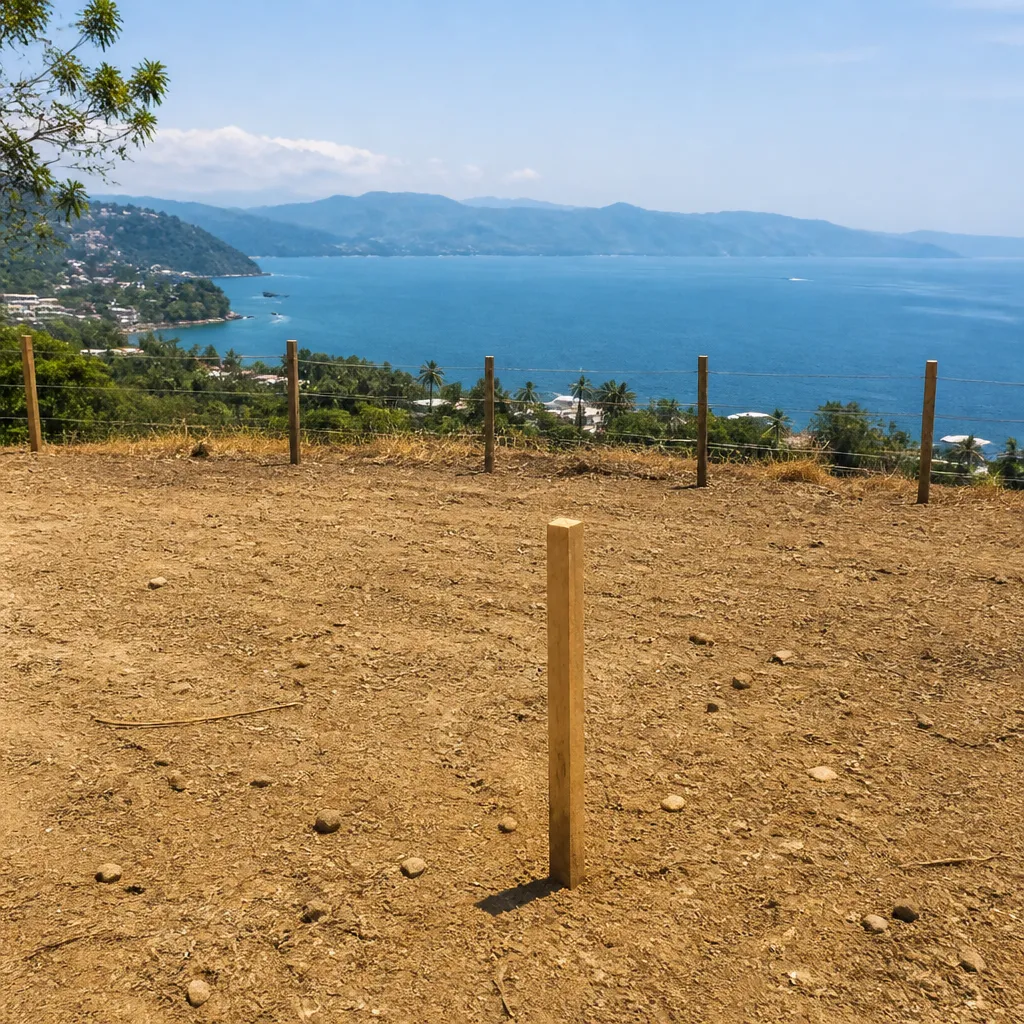
Ejido parcels are often marketed in ways that look identical to titled lots. Signs, stakes, a cleared road, and a photo of the ocean can make a parcel look developed and available. Those signals say nothing about the legal status of the land underneath.
Some sellers also rely on the buyer’s assumption that a foreign national can simply sign and register. That assumption is the core trap, and it is why a careful review should always come before a deposit.
Why Foreign Buyers Cannot Hold Ejido Title
Foreigners generally cannot purchase ejido land as ejido land. To be bought and sold like standard real estate, the parcel must first go through a formal process that removes it from the ejido regime and makes it private property. Only after that process is completed, documented, and recorded can a foreign buyer consider it through the lawful structures available in Mexico.
For a foreign buyer, the lawful options usually mean titled private property bought directly outside the restricted zone, or a bank trust called a fideicomiso inside the restricted zone. Puerto Vallarta sits in that restricted zone, so a fideicomiso is the common route for coastal purchases. The trust does not change the underlying rule: the parcel itself must already be clean.
The Conversion Step Most Sellers Skip
The process that moves a parcel out of the ejido regime is often called dominio pleno conversion. When a seller says the parcel is “almost converted” or “in process,” the parcel is not yet safe to buy. Ask for the completed conversion documents and confirm they were registered, not merely approved or filed.
A common mistake is accepting a promise to finish the conversion after closing. If the conversion is not finished, the buyer carries the risk and the seller has already been paid. Make completion a condition of the deal, not a future task.
Certificates and Private Contracts Are Not Title
A parcel certificate, a notarized private contract, or a possession letter can all be real documents. None of them, on its own, proves that the seller has the right to transfer full ownership. Treat each one as evidence to be checked against the public registry, not as proof of title.
A document that describes a parcel is not the same as a document that transfers ownership of it. Only the registered title answers the second question.
The Real Risks of Buying Ejido Parcels
The risks of ejido land are not abstract. They show up as lost deposits, stalled construction, neighbor disputes, and buyers who discover, years later, that they cannot resell or insure the property. The problem is usually not one big mistake. It is a series of small assumptions that each seemed reasonable at the time.
Sales That Never Reached the Registry
A private sale can be signed, paid, and celebrated without ever being registered. The buyer then holds a contract with a seller who may not have the legal capacity to transfer the parcel. If the seller disappears or the community disputes the sale, the buyer has a claim, but not a title.
Ask whether each transfer in the parcel’s history was registered at the public registry. An unregistered sale is not a minor paperwork issue. It can be the whole problem.
Occupancy and Boundary Disputes
Ejido parcels are often occupied by families, neighbors, or community members who see the land differently than a new owner does. A buyer who moves in may find that someone else has a claim to a part of the lot, a driveway, or a water connection. These disputes are slow and expensive to resolve.
Before you buy, walk the boundaries with the survey in hand. If the physical lot does not match the documents, the documents are not reliable.
Restricted Zone Overlap
Even a parcel that has been converted can run into restricted zone rules that change how a foreigner may hold it. Coastal land near Puerto Vallarta falls within those rules, so the purchase must be structured correctly from the start. A parcel that is legally sound but structured wrongly still creates a problem for the buyer.
Pro tip: Ask the seller to sign a written statement identifying the registered owner, the parcel’s status, and any known occupants. A seller who refuses to sign a clear statement has already told you something useful.
How to Verify Clean Title in Puerto Vallarta
Clean title means three things: the registered owner is the person selling, the parcel is free of unregistered claims and blocking liens, and the land is legally able to be transferred to a foreign buyer through a lawful structure. Verification is the step that proves all three, and it should happen before a deposit or a signed purchase agreement.
Start With the Registry Certificate
Request a current registry certificate for the parcel. It should show the registered owner, any mortgages or liens, and any annotations that affect transfer. Do not accept a photocopy from the seller as a substitute, and do not rely on a certificate older than a few weeks when a deal is moving.
Compare the owner’s name on the certificate with the seller’s identification. If the names or the parcel description do not match, stop and resolve the difference before going further.
Trace the Chain of Title
Title history confirms that the ownership chain is clean. Your lawyer or notary should be able to request prior deeds and review each transfer. The goal is to see an unbroken line of registered transfers, not just a current owner with a current document.
A gap in the chain, a transfer that was never registered, or a transfer that moved the parcel out of ejido status without the completed paperwork is a reason to pause. Many buyers accept a seller’s explanation for a gap. That is the moment to bring in a professional instead.
Check the Ejido Status in Writing
Ask directly whether the parcel is currently ejido land, and request written confirmation of its status from the relevant authority or from a formal document that shows the conversion was completed. A verbal assurance from the seller or a local intermediary is not enough.
If the answer is that the parcel is “in the process of” conversion, the parcel is not ready for a foreign buyer. Put that in writing too, because it changes what you can safely sign.
Mexican Land Title Due Diligence, Step by Step
Title verification is one part of due diligence. A clean title can still hide unpaid taxes, association charges, or a construction issue that makes the property expensive to hold. A complete review covers the legal, financial, and physical side of the parcel before closing.
Liens, Tax Arrears, and Association Dues
Ask for proof that property taxes are current and that there are no outstanding utility or association balances tied to the parcel. Unpaid obligations can attach to the property, and a new owner may be asked to cover them. Make the seller clear every balance as part of the closing conditions.
Our practice is to list every outstanding item in the closing file, with a named responsible party for each. Vague promises to settle later are how buyers end up paying for someone else’s debt.
Measurements Against the Plat
Compare the physical measurements of the parcel with the plat or survey on file. A lot that is smaller than its documents describe is not a bargain if the difference is in the buyer’s favor only on paper. Pay attention to road access, shared boundaries, and easements that cross the lot.
When the survey and the physical lot disagree, the buyer should not assume the discrepancy is minor. Get a surveyor involved before closing.
Notary and Escrow Sign-Off
Once the title, liens, and measurements check out, the transaction moves to closing. Escrow and closing coordination should release funds only when the required documents are in hand and recorded. Money held in escrow is only protected if the conditions for release are written clearly and followed exactly.
Pro tip: Do not wire a deposit to a seller’s personal account for a parcel you have not verified. Hold the funds in a controlled escrow structure tied to specific title conditions.
Restricted Zone Property Law Near the Coast
Restricted zone property law shapes how foreigners can hold land near the coast and at the border. For most coastal purchases, a foreign buyer uses a fideicomiso, a bank trust, rather than holding title directly in their own name. Understanding that structure is essential before comparing any listing.
A fideicomiso is not a 50-year lease. The bank holds the title, and the buyer holds the rights to use, rent, sell, and pass on the property, with the term extendable under the trust’s terms. Selling or passing on a trust property works through assignments and substitute beneficiaries, which is why the trust’s paperwork needs to be reviewed as carefully as the title itself.
The Coastal Rule in Practice
Within 50 kilometers of the coast, foreigners generally acquire land through a fideicomiso rather than direct title. This is the rule most Puerto Vallarta buyers encounter. The rule does not make an ejido parcel safe. It only determines the structure that applies to a parcel that is already lawful to transfer.
Why the Trust Does Not Cure a Bad Parcel
A common assumption is that a bank trust solves every title issue. It does not. If the underlying parcel is still ejido land, is unregistered, or has an unresolved claim, the trust is built on a weak foundation. The bank may set up the trust, but that does not verify the parcel for you.
Verification happens before the trust is signed. The trust is the lawful vehicle, and the title is the thing that has to be clean.
The Federal Beach Strip
The 20-meter federal zone along the shoreline (ZOFEMAT) remains government land. Beachfront property does not automatically include the beach strip, and any right to use that strip comes through a separate concession. Sellers sometimes describe beachfront lots as if the strip is included, so confirm the boundaries in writing.

Comparing Ownership Options
Buyers often compare listings as if all ownership structures were equal. They are not. The table below shows how the three most common options differ in what the buyer actually receives and where the main risk sits.
| Ownership Option | What You Actually Get | Main Risk |
|---|---|---|
| Ejido parcel bought through a certificate or private contract | A right claimed by the seller, documented privately, with no registered transfer to you | No registered title, unresolved community claims, and no lawful route for a foreign buyer to hold it |
| Titled private property bought directly outside the restricted zone | Registered title in your name, subject to the usual checks on liens, taxes, and survey | Hidden liens, a broken chain of title, or a seller who is not the registered owner |
| Fideicomiso bank trust on a verified coastal parcel | Bank-held title with your rights to use, rent, sell, and pass on the property through the trust | Trust fees and ongoing costs, plus the risk of a parcel that was never clean to begin with |
Read the table with one rule in mind: the structure only protects you if the parcel itself has been verified. A perfect trust on an unverified ejido parcel is still a bad purchase.
What to Do If You Already Bought Ejido Land
Some buyers discover the problem after signing. The situation is serious, but it is not always hopeless. The first priority is to stop additional payments until the file has been reviewed by someone who can read the registry and the transfer history.
Gather every document you received, including the contract, receipts, the certificate, any letters from the seller, and correspondence. Those papers show what was promised and when, and they are the starting point for any claim or negotiation.
Stop Further Payments and Preserve the File
Do not make a final payment or sign a new agreement until the file has been reviewed. A seller who pressures you to close quickly is telling you something about the deal. Keep copies of everything, including messages and receipts.
Assess What Can Be Fixed
Some ejido parcels can be converted and registered, but only if the process is still available and the seller cooperates. Others cannot be made lawful for a foreign buyer under the structures discussed here. A professional review will tell you which category your parcel falls into, and that answer determines whether you should pursue completion, renegotiation, or recovery of your money.
Grupo Nar offers a free initial consultation for buyers who want an honest first opinion on a parcel before committing further funds.
Frequently Asked Questions
Can a foreigner buy ejido land in Mexico?
Foreigners generally cannot buy ejido land as ejido land. The parcel must first complete the formal conversion out of the ejido regime and be registered as private property. Only then can a foreign buyer consider it through a lawful structure.
Is a parcel certificate enough to prove ownership?
No. A parcel certificate or a private contract can be real documents, but neither one proves that the seller holds registered title with the right to transfer it. Check the current registry certificate and the chain of title before relying on any of them.
What is the difference between ejido land and a fideicomiso?
Ejido land is a communal tenure system whose parcels must be converted before they can be sold like private property. A fideicomiso is a bank trust used by foreign buyers to hold coastal property within the restricted zone. The trust is a structure for a verified parcel, not a fix for an ejido parcel.
How do I verify clean title for a property in Puerto Vallarta?
Request a current registry certificate, trace the full chain of title, confirm the ejido status in writing, and check liens, tax arrears, and survey measurements. Have a lawyer or notary review each step before you pay a deposit.
What should I do if I already paid for an ejido parcel?
Stop further payments, preserve every document, and have the file reviewed by a professional. The answer depends on whether the conversion can still be completed and whether the seller will cooperate, so act before the deadlines in your contract pass.
What did the seller tell you about the parcel’s legal status when you first came across an ejido listing, and how did you find out what was actually true?
References
- Overview of foreign land ownership rules, fideicomiso terms, and ejido warnings in Mexico
- Explanation of why foreigners cannot buy ejido land directly and how restricted zone rules apply
- Guide to reviewing title history and ownership records before buying in Mexico
- Checklist for pre-offer due diligence, including liens, chain of title, and survey checks