




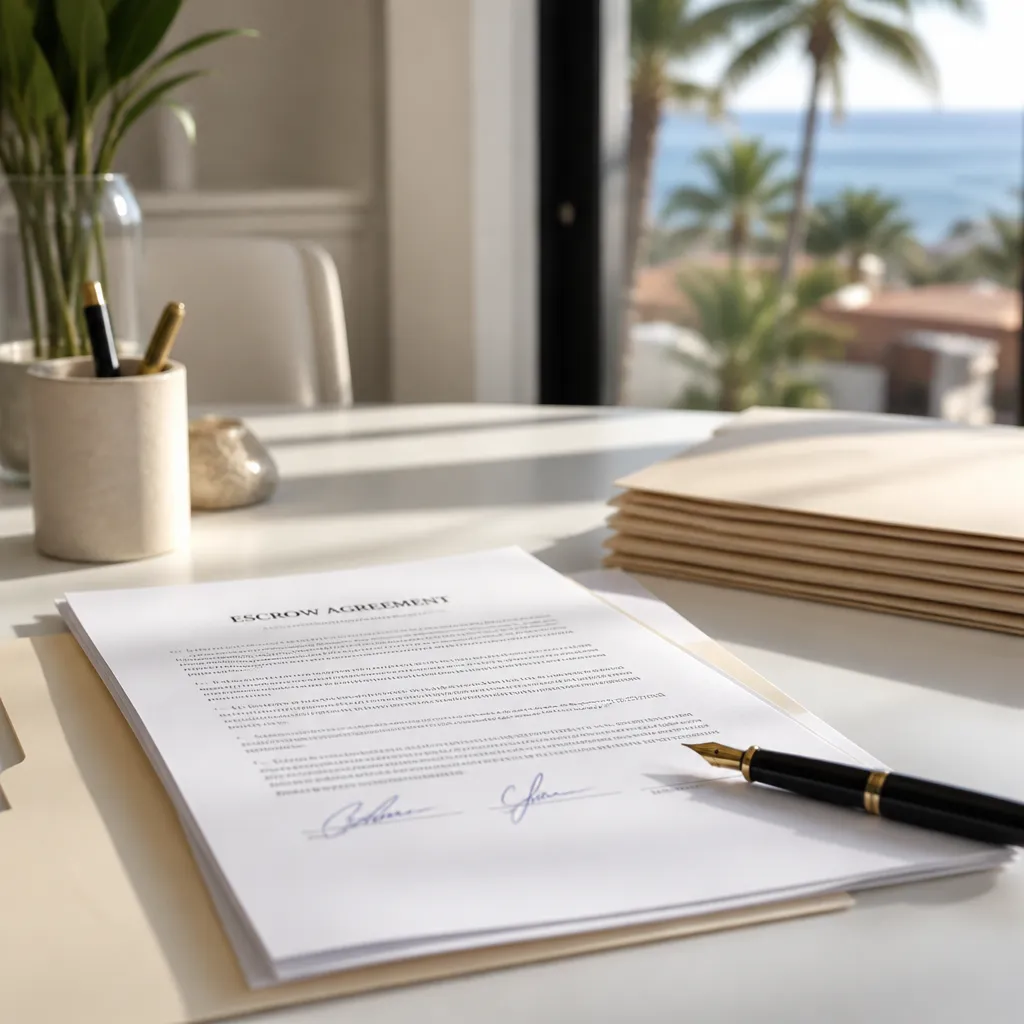
If you have bought a home in the United States or Canada, you already know escrow as a routine step. In Mexico, the same idea exists, but it is rarely offered by default, and many foreign buyers discover that only after they have wired a deposit. Escrow Mexico real estate deals are still the exception in the local market, so the protection you expect will not appear in the contract unless you request it. This guide explains how escrow works, where deposits tend to go wrong, and how a safe money transfer for a Mexico property purchase is structured for buyers in Puerto Vallarta and Bahía de Banderas.
Table of Contents
- Quick Takeaways
- What an Escrow Account Is in a Mexican Purchase
- Why Local Sellers Rarely Offer Escrow
- The Step-by-Step Escrow Flow
- Escrow Options Compared
- Mistakes That Cost Foreign Buyers Their Deposits
- Fees, Timing, and the Fideicomiso
- Choosing an Escrow Provider
- Frequently Asked Questions
- References
Quick Takeaways
| Key Insight | Explanation |
|---|---|
| Escrow is not the default in Mexico | Local sellers usually expect a direct good faith deposit. You must request escrow in writing before you pay anything. |
| Use an independent escrow agent | A neutral party holds the funds under a signed escrow agreement and releases them only when the stated conditions are met. |
| Never send deposits to an agent or lawyer’s personal account | A personal account has no release conditions, no agreed timeline, and no neutral party answerable to both sides. |
| Pay in milestones, not one lump sum | Tie each release to a document you can verify, such as a clear title report or confirmed utility connections. |
| Keep direct payments to the seller small | One published guide advises against sending more than 30 percent of the price directly to a seller or developer. |
| Budget for the escrow fee and get it in writing | Published guides put the fee at roughly $500 to $750 USD, so request a quote that states what it covers and who pays it. |
| Coordinate escrow with the bank trust | Most coastal purchases run through a fideicomiso, so the escrow schedule and the trust timeline must match before closing. |
What an Escrow Account Is in a Mexican Purchase
An escrow is a legal arrangement in which a neutral third party holds money or documents until a defined condition is met. In a property purchase, your funds sit outside the seller’s control until the transaction is ready to close. Escrow is commonly used to protect both buyer and seller, but it is not automatic. Someone has to request it, and both sides have to agree to it.
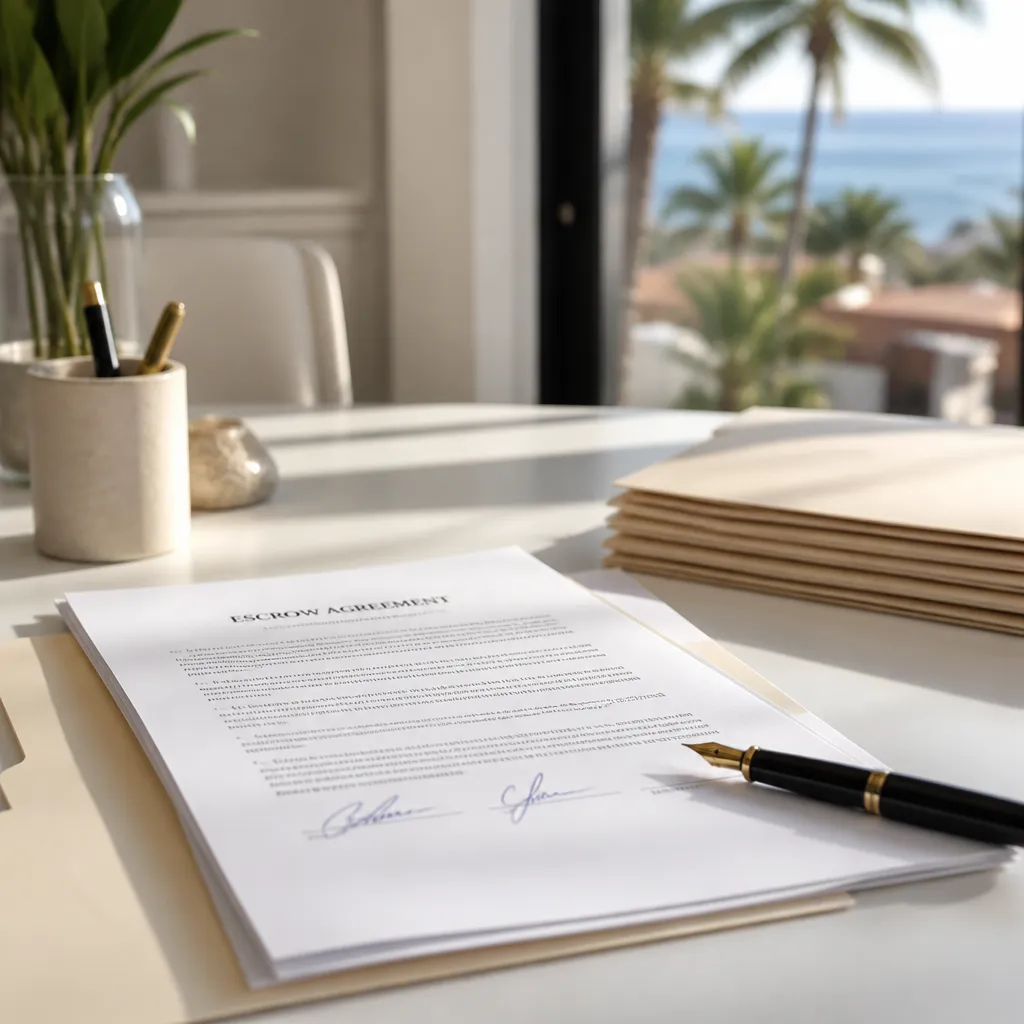
In practice, the escrow is governed by a written escrow agreement. That document sets out who deposits what, when each amount is released, and what must be true before the money moves. Without it, you have a bank transfer and a verbal promise, and your protection is limited to whatever the parties remember later.
How an Escrow Agreement Is Structured
A well-drafted escrow agreement names the escrow agent, identifies the buyer and seller, and lists the purchase price and each deposit amount. It also defines the conditions for each release, such as a title report or a completed survey. The agreement should spell out the fee, the account details, and the timeline for disbursements.
Many buyers skip the schedule, and that is a mistake. If the document says the final payment is released “upon closing” without defining closing, you have invited a dispute. Specific dates and conditions are what make the agreement useful when something goes wrong.
Who Signs the Release Instructions
Release instructions are the signed orders that tell the escrow agent to pay out funds. In a sound structure, both buyer and seller sign them, so neither party can move money alone. That shared signature is the core of the protection. It stops a seller from collecting a deposit on a deal that has already failed, and it stops a buyer from withholding funds after the agreed conditions have been met.
Why Local Sellers Rarely Offer Escrow
Escrow is not standard in Mexico, and the reasons are historical rather than technical. Local buyers usually pay a deposit directly to the seller once the price is agreed, as a sign of good faith. The balance is paid at closing, after the notary confirms the deed is clear and the property is free to sell.
Escrow became common mainly because buyers from the United States and Canada wanted a safer way to avoid losing a deposit while a deal was still under negotiation. Most foreign purchases in the area are paid in cash, which means there is usually no lender adding its own checks to the process. The buyer’s own diligence carries more weight than it would in a financed deal.
The Good Faith Deposit Model
The good faith deposit works well when both parties are local and know the system. A foreign buyer, on the other hand, has no easy way to judge the seller’s intentions from a distance. If the deposit goes straight to the seller and the deal stalls, recovering the money depends on negotiation, which is slow and uncertain.
The money is only as protected as the account it sits in. A deposit held in a personal account protects the account holder, not the buyer.
Where Deposits Actually Sit
Funds are customarily held in the realtor’s, developer’s, or lawyer’s personal bank account. That arrangement is the gap foreign buyers need to close. A personal account has no release conditions, no agreed timeline, and no neutral party answerable to both sides.
Demand for true escrow is rising as more foreign buyers ask for it, and some real estate companies now offer escrow management. Asking is the first step. The second is confirming whose account will receive the money, and under which written agreement.
The Step-by-Step Escrow Flow
A typical escrow in a Mexican purchase runs in stages rather than as one lump payment. The first deposit usually goes in when you sign the purchase agreement. Later deposits are tied to milestones, and the final payment is released when the property is ready and the closing conditions are satisfied.
This structure mirrors the U.S. process many foreign buyers already know, but it has to fit Mexican deed and notary procedures. The notario public, a licensed lawyer appointed by the state, prepares and signs the public deed. The escrow must be timed so that funds are released at the right point in that process.
Opening the Account and Signing
Before any money moves, the escrow agent opens the account under a signed escrow agreement. Both buyer and seller should sign it before the first deposit is wired. If the seller refuses to sign an escrow agreement, that refusal is the most useful information you will get in the entire negotiation.
Pro tip: Request the draft escrow agreement before you sign the offer. A reputable provider will send it promptly, and reading it early gives you time to negotiate the release conditions while you still have leverage.
Milestone Releases
Milestones are what make escrow useful. Typical conditions include a clear title report, a completed survey, confirmation that utilities are connected, and, for a build, verified completion of each construction stage. Each release should match a document you can check, not a verbal update from the developer.
Build the schedule around the property’s actual status. For a resale, the main milestone is usually title and notary clearance. For new construction, each stage should be listed in the agreement with the amount released at that point.
Release at the Notary Closing
At closing, the escrow agent releases the remaining funds to the seller according to the signed instructions. The release should happen only after the notary has the deed prepared and the conditions in the agreement have been met. The escrow fee is paid as the agreement specifies, and the closing statement should show it clearly.
If a condition fails, the agreement must say how funds come back to the buyer. A clause that is silent on refunds is a weak clause, and it is usually the first place a dispute begins.
Escrow Options Compared
Reading the Three Main Options
Buyers in Puerto Vallarta and Bahía de Banderas usually choose among three paths. The differences are not subtle. Two of them leave you with little recourse if the deal goes wrong, and the third costs more but gives you written release conditions and a neutral party.
| Approach | How the Money Moves | Risk for the Foreign Buyer |
|---|---|---|
| Direct payment to the seller at the notary | The full balance or large deposits go straight to the seller with no neutral holder | If the deal fails, you may spend months chasing a refund with no agreed release conditions to rely on |
| Deposit into an agent’s or lawyer’s personal account | Funds sit in an individual’s bank account with no written escrow terms | Highest risk: no agreed timeline, no neutral party, and recovery depends on trust |
| Independent escrow agent under a signed escrow agreement | A neutral agent holds funds and releases them only on signed instructions tied to stated conditions | Lowest risk of the three, though it adds a fee and some extra time to the schedule |
When Each Option Makes Sense
Direct payment may be tolerable for a small, fully documented transaction with a seller whose title is already confirmed, but even then a neutral holder is safer. Personal account deposits are never the right choice for a foreign buyer. An independent escrow agent is the structure we recommend for any deposit above a token amount.
The third option takes more time to set up and adds a fee, and that is the trade-off. Compare that cost with the deposit at risk. If the cost of escrow is small relative to the price, it is usually the cheapest insurance in the transaction.
Mistakes That Cost Foreign Buyers Their Deposits
Most deposit losses in this market come from a small set of avoidable errors. The buyer is rarely careless. More often, the buyer trusts a professional who seems to be handling everything. The fixes below are simple, but they only work if you apply them before the first wire.
Depositing Into an Agent’s or Lawyer’s Account
The most common error is wiring a deposit into the personal account of the real estate agent or a lawyer, often because it feels like the professional is taking care of the transaction. Some published guides say never to deposit funds into a real estate agent’s bank account, however well regarded the agent is. An agent is not the independent counterparty you need, and the account carries no written release conditions.
If an agent asks for money in a personal account, ask for the escrow agent’s name and the escrow agreement first. A legitimate professional will have an answer ready. A professional who pushes back on that question has told you enough.
The 30 Percent Limit
One published guide advises against depositing more than 30 percent of the purchase price directly into a seller’s or developer’s bank account. Some sellers and developers still expect buyers to fund construction through large early payments. When a project stalls, a big early payment becomes an unsecured loan to the developer.
Apply the limit as a ceiling, not a target. Keep direct payments small, hold the rest in escrow, and release it against verifiable milestones. That keeps your exposure proportional to what has actually been delivered.
Vague or Unsigned Escrow Agreements
A document labeled escrow is not enough. Check who signs the release instructions, what triggers each payment, what happens if a condition fails, and how funds are returned. In practice, buyers agree to escrow in principle, then accept a short memo that leaves all of those points open.
Pro tip: Have your own attorney read the escrow agreement against the purchase contract. The release conditions in the two documents must match, or a dispute will tend to favor whichever document is vaguer.
Fees, Timing, and the Fideicomiso
What the Escrow Fee Covers
Published industry guides put escrow fees at roughly $500 to $750 USD for opening, administering, and releasing funds. Fees change over time and vary by provider and transaction size, so treat any published figure as a starting point. Request a written quote that states what the fee covers and whether it applies to each deposit or only to the final release.
Ask who pays the fee. Some buyers assume the seller covers it, while sellers often assume the buyer does. Put the answer in the contract so it does not surface at the closing table.
Pro tip: Ask for the fee as a single line item in the purchase contract, along with the escrow agent’s name. That turns a vague cost into a term both sides have agreed to.
Timing Around the Bank Trust
Most coastal property in Puerto Vallarta and Bahía de Banderas is held by foreign buyers through a fideicomiso, a Mexican bank trust. The trust gives the buyer the beneficial rights to the property while the bank holds the legal title. Escrow and the trust are separate tools, but they must be scheduled together.
Escrow adds steps, so a closing may take longer than a direct payment deal. Build that time into your move-in plans and any sale or rental commitments. Do not let a seller’s deadline push you into skipping the agreement or shortening the review period.
Choosing an Escrow Provider
Independence From the Seller and the Agent
Look for an escrow provider that is independent of both the seller and the agent. Independence is the entire point of escrow. If the provider earns a commission from the sale or shares ownership with the developer, you are paying for a neutral party that is not neutral.

Ask how the provider is paid and whether it has any connection to the transaction. A straight answer is a good sign. Vagueness is a reason to pause.
Four Questions to Ask Before You Wire
Before you send any money, ask four questions. Who holds the funds? Under what written agreement? What releases them? How do you get them back if the deal fails? If any answer is unclear or only verbal, stop and resolve it first.
A provider who can explain the process on the first call is usually one who will explain it again at the closing table. Clear answers early save you from surprises later.
Getting Started With Your Deposit Plan
Our firm handles escrow and closing coordination, fideicomiso setup, and contract review under one roof. That means the deposit plan and the trust timeline are built together rather than in separate conversations. We offer a free initial consultation, which is the right place to review your deposit structure before any money moves. You can start at the Grupo Nar website.
Frequently Asked Questions
Is escrow required when buying property in Mexico?
Escrow is not standard in Mexico, so it is not something the seller will usually offer on their own. You need to request it, and both parties have to agree to a written escrow agreement before you pay a deposit.
Is Mexico property escrow safer for foreigners than paying the seller directly?
Yes, when the escrow agent is independent and the agreement sets clear release conditions and refund terms. Direct payment gives you no neutral party holding the money, which is the main gap escrow closes.
How much does escrow cost in Mexico?
Published guides put the fee at roughly $500 to $750 USD, but fees vary by provider and transaction size. Ask for a written quote that explains what the fee covers and who pays it.
Can I send my deposit to my real estate agent?
Avoid it. A deposit placed in an agent’s or lawyer’s personal account has no release conditions and no neutral party, which leaves you with very little recourse if the deal stalls.
What happens to my money if the deal falls through?
It depends on the escrow agreement. The document should state the conditions under which funds are returned to the buyer. If it is silent on refunds, recovery depends on negotiation or a legal claim, and both are slow.
Does escrow work alongside a fideicomiso?
Yes, but the two are separate tools that must be coordinated. The escrow schedule and the bank trust timeline should be set together so that deposits are not held waiting on a trust that is not yet ready.
Tell us about your experience with deposits on a Mexican property: did you use escrow, and what would you do differently next time?
References
- Guide to whether escrow is needed when buying a home in Mexico
- Article on the role of escrow accounts in Mexican real estate closings
- Comparison of buying property in Mexico versus the United States and Canada
- Breakdown of closing costs in Mexico compared with the USA