




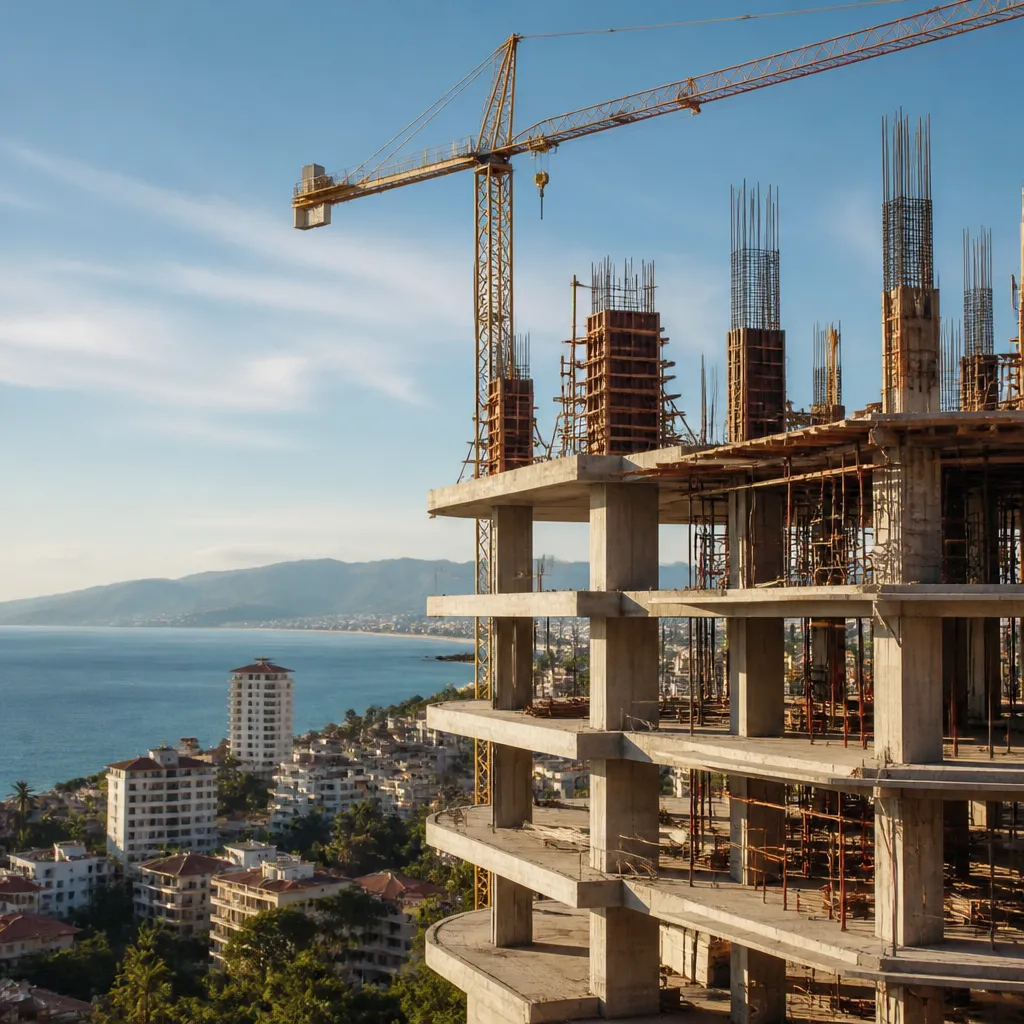
Buying a pre-construction property in Mexico means paying today for a building that does not exist yet. That gap is where most of the legal risk sits. In Puerto Vallarta, presales make up a large share of listings, yet a deposit can disappear if the land is encumbered, the permits do not cover what is being built, or the money goes somewhere you never see. Understanding pre-construction property Mexico legal risks before you sign is the difference between a fair discount and an expensive lesson. Below is how we review these deals at Grupo Nar and what we tell foreign buyers before any money moves.
Table of Contents
- Quick Takeaways
- Why Presales Carry More Risk Than Resale
- Where Your Deposit Actually Goes
- Developer Contract Review in Puerto Vallarta
- Checking the Developer and the Land Title
- Permits and the Construction You Can See
- The Fideicomiso and Your Construction Payments
- Presale or Finished Unit: The Real Math
- Warning Signs That Should End the Deal
- Frequently Asked Questions
- References
Quick Takeaways
| Key Insight | Explanation |
|---|---|
| Treat every deposit as money at risk | Until you hold the keys and the title, each payment to a developer is exposed to the developer’s finances and permits. |
| Hold back 30% to 40% of the price | Keep that share until handover and pay it through a notary or real escrow with defined release conditions. |
| Calendar the cancellation window | Under NOM-247-SE-2021 buyers usually have 5 business days after signing to cancel, so mark the deadline the day you sign. |
| Verify delivered buildings, not announced units | Ask for finished, titled projects by the same legal entity that will sign your contract. |
| Pull the land title and any master mortgage | A clean unit can still be caught in a bank claim if the whole parcel is encumbered. |
| Demand a real discount | A presale should beat the sold prices of comparable finished units by a meaningful margin, not a few percent. |
| Know what the fideicomiso covers | Your bank trust protects ownership at closing, not the installments you pay during construction. |
Why Presales Carry More Risk Than Resale
A resale home has a seller, a title that already exists, and a building you can inspect. A presale has none of those things yet. You are paying for a unit that depends on land work, permits and construction, and on the developer still being in business when the keys are handed over.
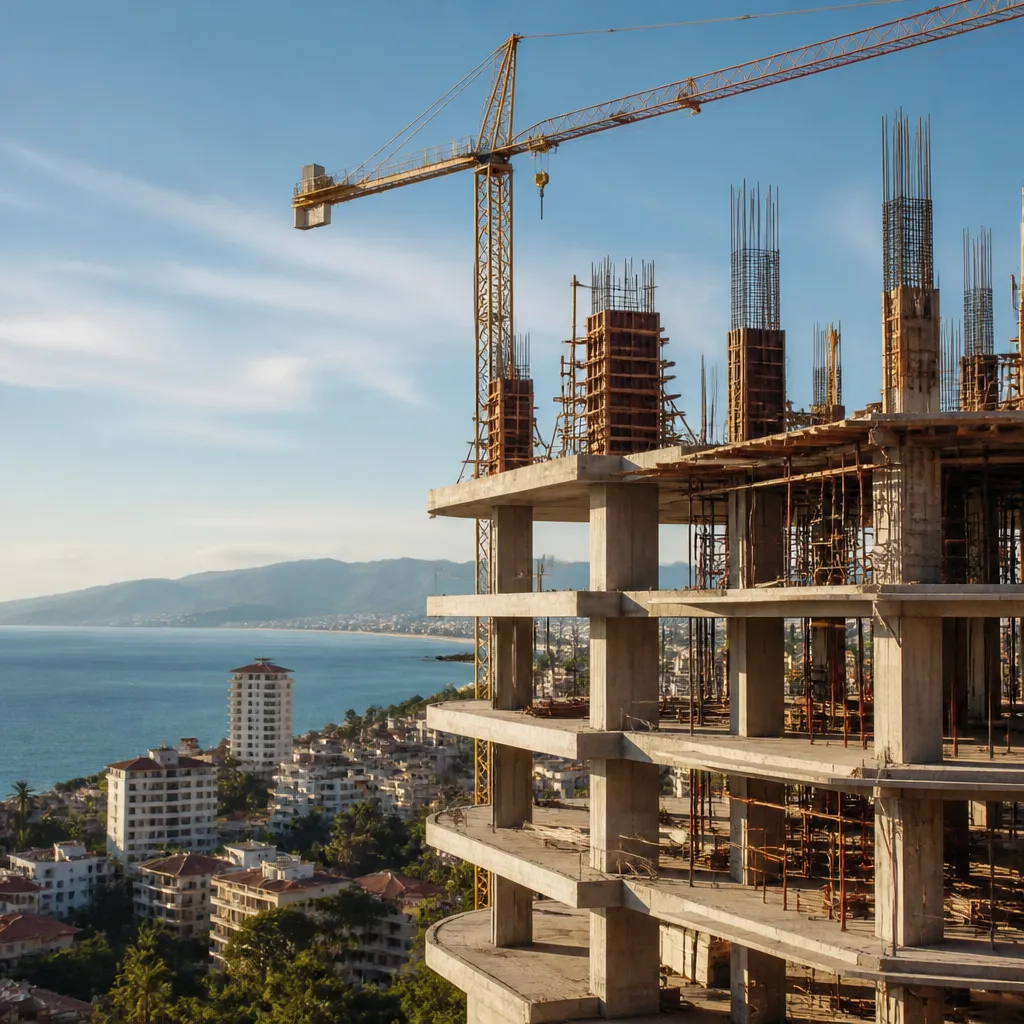
In Puerto Vallarta, presales are 46% of listings but only 26% of sales, which shows how many projects stall, reprice or never close. A recent national analysis of presales reached a similar conclusion: failed projects are common enough that any deposit should be treated as money at risk until you hold the keys.
Treat every payment you make before handover as money at risk until the keys and the title are in your hands.
Why the market now favors buyers
National prices rose 7.3% in a year according to SHF data for the second quarter of 2026, while mortgages barely moved, up 0.3%. When a developer needs your cash to keep a project moving, you have more room to ask for better terms, including a smaller first installment, a clear delay penalty and a written refund process.
Why failed projects still happen
Presales fail for ordinary reasons. A developer runs short of working capital, a financing partner pulls out, or the company selling the units is not the company that owns the land. None of this is visible from a sales center or a rendering. You only see it if you ask for the corporate chain, the land title and the payment plan before the first transfer.
Where Your Deposit Actually Goes
The biggest financial risk in a presale is often not build quality. It is where your money sits while the building goes up. Contracts typically ask for a reservation fee, then a series of installments tied to construction milestones, and the developer controls each transfer.
The exposure on a MXN 6 million condo
Take a MXN 6 million condo, roughly USD 323,000, with 40% due during construction. That means MXN 2.4 million is exposed to the developer’s business until the unit is delivered. Recovering installments from a stalled developer is slow and uncertain, which is why that exposure matters so much.
Our rule is simple: keep 30% to 40% of the price back until handover. That holdback is not a reward for paying early. It is a buffer that protects you if the project changes hands or runs out of money.
Notary and escrow options
Installments should ideally go through a notary or a real escrow arrangement with written release conditions, not straight into the sales company’s account. A Notary Public in Mexico is a neutral public official who formalizes the transaction, which makes the notary a far better place to hold payments than a sales office. Our escrow and closing coordination work follows the same logic: money moves only when documented conditions are met.
Budget separately for closing costs. They are often estimated at roughly 6 to 10 percent of the purchase price, and they land on top of the installments you have already committed to.
Pro tip: Ask the developer in writing which account receives your money, and confirm that the account holder matches the company named in your contract.
Developer Contract Review in Puerto Vallarta
The developer contract is where most presale problems are either prevented or locked in. A brochure is marketing. The contract is what counts if something goes wrong, so every promise that matters has to appear there in writing. Buyer guides warn that developers may change blueprints, delay timelines or cut material quality, so the specifications need to be detailed.
The NOM-247-SE-2021 standard requires disclosure of title, liens, permits, payments, delivery and penalties. Disclosure is a floor, not a guarantee. Read what is written, then check it against what the sales team promised.
Clauses that decide whether you get your money back
Look for four things: the exact legal name of the seller, the refund terms if the developer cancels, the conditions for releasing each payment, and what happens to penalties if the project stalls. If any of these say “to be determined,” the contract is not ready for your signature.
A Profeco-registered contract is a minimum check, not a safety certificate. Registration does not show whether the developer has cash, or whether the permits cover the building being sold.
Delivery dates and what happens when they slip
A late handover is frustrating, but it is not the worst outcome. Losing your deposit or never getting title is. Ask for a delivery date, a defined grace period and a specific remedy for delay, such as a monthly penalty payable to you or a refund with interest. The number belongs in the contract, not in an email.
The five-business-day cancellation window
Under NOM-247-SE-2021, buyers usually have 5 business days after signing to cancel. Mark that deadline the day you sign, and do not let a sales team talk you out of using it. If you have already paid, confirm how and when a refund would be issued before the window closes.
Walk away when the developer gives you a 48-hour deadline and replaces documents with promises. Pressure at the signing table usually means the paperwork would not survive a second look.
Pro tip: Have a lawyer who works only for you review the contract before the first payment. A lawyer paid by the seller is not reviewing for you.
Checking the Developer and the Land Title
A brand is not a track record. The company on the sales banner may be a marketing vehicle, while the owner of the land and the company signing your contract are different entities. Before you pay, you need to know who will be responsible for your money.

Track record: buildings delivered, not units announced
Judge a developer by what it has finished and titled. Three completed buildings with owners living in them prove more than 1,500 announced units on a renderings page. Ask for the names of finished projects, their delivery dates and whether buyers received title, then verify a sample yourself.
Check that the company signing your contract is the same company with that record. A subsidiary created for one project does not inherit a developer’s history.
Land title and any master mortgage
Request the current registry certificate for the land and compare the registered owner with the seller. Also look for a master mortgage or lien covering the whole parcel. If the land is encumbered, your unit can be caught up in a bank claim even when your own payments are current.
Registries you can check yourself
Start with the Profeco registry and the Buró Comercial, which can show complaints or credit history a sales team will not mention. A national developer blacklist was proposed in Congress in February 2026, but it is still only a proposal and does not cover deposits. For now, these checks are your job.
A developer that refuses to name its landowner or its financing bank is giving you information. In our experience, the refusal usually means the answer would not help you.
Permits and the Construction You Can See
Visible construction is the most misleading comfort in a presale. Cranes, concrete and a finished facade look like progress, but none of them proves the building has the permits it needs. A project can look far along and still face a stop order.
Mexico’s environmental enforcement agency, Profepa, shut seven projects in June 2025, and one of them was already 90% built. One state regulator had flagged 123 irregular developments by August 2026. The problem is not limited to a few bad sellers, which is why we ask for permit files before we discuss price.
Why visible construction proves nothing
A building can rise on permits that cover only one phase, a different unit count or a different height. When an authority checks, the work can be treated as unauthorized even if you have been paying for months. The specifications in your contract need to match the approved plans, not the marketing render.
Asking for the permit file
Request copies of the construction permit, the land-use authorization and any environmental approval. Confirm they name the exact project and unit count you are buying. If the developer says permits are “in process,” get the status in writing with a date by which they must be issued. A deal that depends on a future permit is a bet, not a purchase.
Pro tip: Compare the approved unit count on the permit with the number of units in the sales brochure. Any mismatch is a question you need answered before you sign.
The Fideicomiso and Your Construction Payments
Foreign buyers near the coast hold residential property through a fideicomiso, a bank trust that runs for 50 years and can be renewed. A Mexican bank holds legal title as trustee while you keep the beneficial rights. It is a strong structure for the property you end up owning, which is why many buyers assume it also protects the money they pay during construction. It does not.
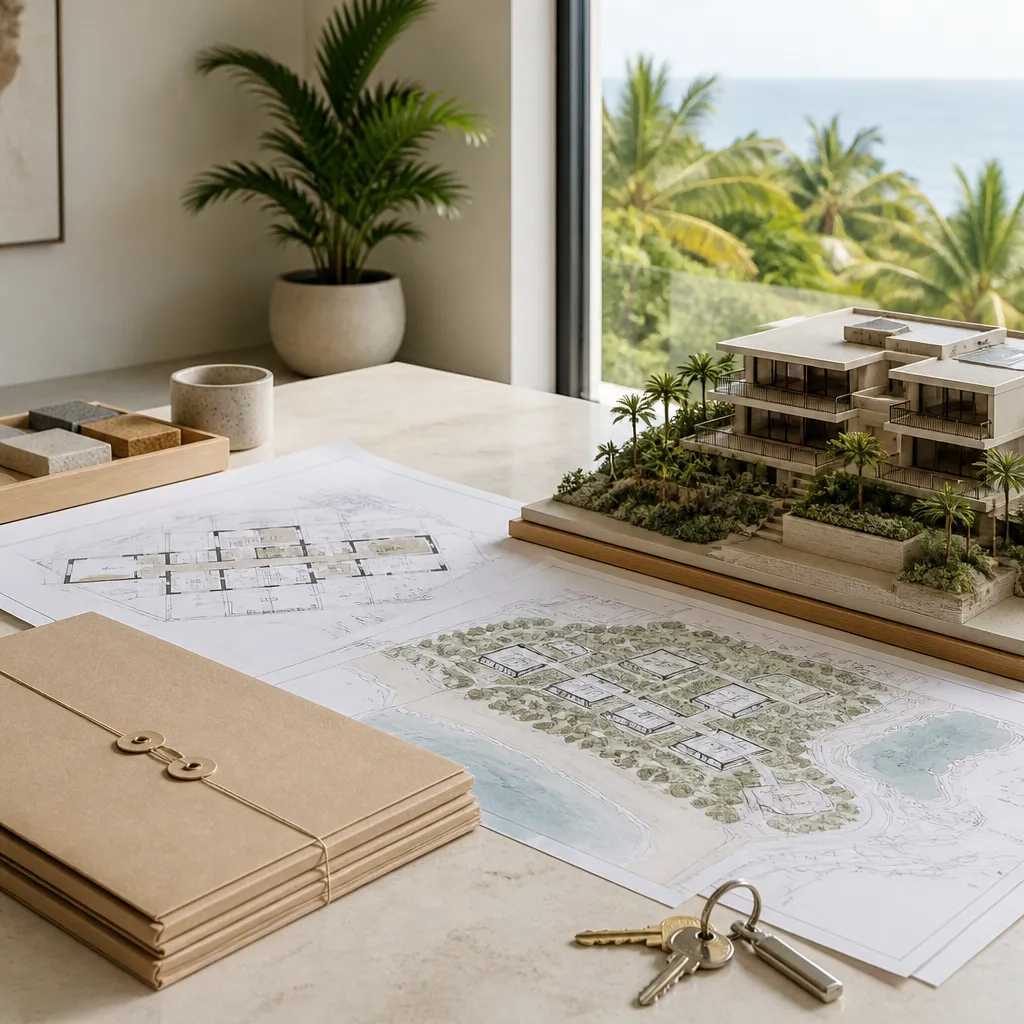
The trust protects ownership at closing. It does not protect the installments you send a developer before the unit exists. These are two different risks, and the trust covers only one of them.
What the trust protects at closing
Once the unit is built and titled, a properly structured fideicomiso gives you the rights to use, rent, remodel, sell and leave the property to heirs. We handle fideicomiso setup for foreign buyers and coordinate it with the closing, so the trust is aligned with the transfer.
Opening the trust before your first payment
Ask whether the fideicomiso can be opened at signing, before the first installment, and whether it will name the specific unit you are buying. A trust opened after the money has moved only solves the closing problem. Also confirm who controls the funds during construction. If the answer is the developer alone, the trust is not a construction safeguard, and that gap has to be closed with a notary or escrow arrangement.
Presale or Finished Unit: The Real Math
Presales are sold on discount, so the real question is whether the discount pays you for the risk. A presale priced at MXN 5.1 million against finished units selling at MXN 5.3 million saves only 3.8 percent. That is a thin reward for two years of exposure to construction, permits, financing and delivery.
Our view is blunt. Buy a presale only when most of the checks in this article come back clean and the discount against sold prices of finished units is large. Otherwise, a finished or nearly finished unit is usually the better deal, because you can inspect what you are paying for.
Comparing the three paths
Each option carries a different mix of money at risk and paperwork. The table below sets out the trade-offs we walk clients through before any deposit moves.
| Option | Money at Risk Before Handover | What You Must Verify |
|---|---|---|
| Presale with installments paid directly to the developer | Every installment, often including 40% of the price during construction | Developer track record, land title, master mortgage, permits, refund terms |
| Presale with payments held by a notary or escrow | Limited to the agreed release conditions, with 30% to 40% held back until handover | Escrow terms, release conditions, who signs each release, cancellation rights |
| Finished or nearly finished unit with title in hand | The purchase price and closing costs at closing | Registry certificate, fideicomiso scope, existing liens, inspection results |
What a presale discount has to cover
A presale discount has to pay for possible construction delay, the time and cost of a refund process, and the years your money is tied up. If the discount does not clear those costs, you are paying extra for uncertainty.
Warning Signs That Should End the Deal
Some presales fail the first time you read the file. Others look fine until the seller asks for money faster than the paperwork can move. Knowing which signals should stop the deal saves weeks of effort and protects your deposit.
Pressure and short deadlines
A 48-hour deadline that replaces documents with promises is a reason to walk away. So is a discount that expires at signing, a sales team that refuses to let a lawyer read the contract, or a request to wire money to a personal account. Legitimate developers can wait a few days for a legal review.
Documents that never arrive
If the land certificate, permit file or corporate documents stay “almost ready,” the answer is probably no. Set a deadline for each document and stop the process when it passes. A missed deadline on paperwork is a preview of what the first payment would look like.
Frequently Asked Questions
Is pre-construction property in Mexico safe to buy?
It can be, but only selectively. A presale is reasonably safe when the land, permits, contract, developer and payment plan all check out. If any of those is unclear, treat your deposit as money at risk.
Does a Profeco-registered contract guarantee my deposit?
No. Registration is a minimum check that confirms basic disclosure. It does not show whether the developer has the cash to finish or whether the permits cover what is being built.
How much of the price should I hold back during construction?
We recommend keeping 30% to 40% of the price back until handover, paid through a notary or real escrow with defined release conditions. Paying the full installment schedule directly to a developer multiplies your exposure.
How long do I have to cancel a presale contract?
Under NOM-247-SE-2021, buyers usually have 5 business days after signing to cancel. Confirm the exact window in your own contract, and calendar the deadline the day you sign.
Does a fideicomiso protect the payments I make during construction?
No. A fideicomiso protects ownership at closing, once the bank holds title as trustee for you. Payments made before handover need separate protection through a notary or escrow arrangement.
Do I need my own lawyer if the developer already has one?
Yes. A Notary Public in Mexico is a neutral official, but the developer’s lawyer works for the seller. Our bilingual team reviews contracts and title for the buyer, and you can book a free initial consultation by calling +52 322 135 7031.
Have you bought a pre-construction property in Puerto Vallarta, and which check would you have wanted to know about before you paid your first installment?