





Every October, Mexican real estate listings start to look like a costume party: glossy photos, “last unit” urgency, and a seller who suddenly needs a deposit by Friday. High season in Puerto Vallarta brings more showings, more time pressure and more pressure to sign, and that is when Mexico real estate scams foreigners fall for tend to multiply. This guide covers five tricks we see most often, and the checks that expose them before any money moves.
Table of Contents
- Quick Takeaways
- Duplicate Sales and Unregistered Ownership
- Ejido Land and Informal Sales
- Fake Contracts and Pressure to Sign
- Presale and Off-Plan Deposits
- Rentals and Fake Vacation Listings
- Comparing Three Verification Routes
- Neighborhood and Building Checks in Puerto Vallarta
- Frequently Asked Questions
- References
Quick Takeaways
| Key Insight | Explanation |
|---|---|
| Pull the registry record yourself | A deed shown by the seller tells you little. The Public Registry of Property tells you who holds rights, and your notario or lawyer should read it line by line. |
| Treat ejido land as a separate question | Land that was never properly privatized can look normal on paper while ownership stays unclear. Confirm the status before you discuss price. |
| Never wire a deposit to a personal account | Money should move through a structured escrow or closing process tied to a signed contract, with receipts you can trace. |
| Read the Spanish contract before you sign | An English summary is not the contract. If you have not had the Spanish version reviewed, you do not know what you are agreeing to. |
| Confirm who owns a vacation rental | Fake rentals reuse other people’s photos. Ask for proof of ownership and a verifiable address before you send a booking deposit. |
| Check HOA fees and building condition before offering | Monthly fees and building problems such as sewer issues can cost far more over a few years than a discount on the asking price. |
Duplicate Sales and Unregistered Ownership
The oldest trick is selling the same property twice. A seller or agent advertises a house they do not own, or a lot with an open dispute, and collects interest from several buyers at once. In practice, the buyer who registers rights first is usually the one who keeps the property, and everyone else is left holding a contract with a person who had nothing to convey.
High season makes this worse because listings move fast and buyers who are in town for one week feel they cannot wait for a full search. A photo check cannot tell you who owns the land. Only the public record can.
Pull the registry record yourself
Verifying ownership means checking the Public Registry of Property (Registro Público de la Propiedad) for the exact property and the owner’s name, not the name on a brochure. Your notario or lawyer should order the record and read every entry, including liens, annotations and any restrictions on transfer. A registered title is where the check starts, not where it ends.
Pro tip: Ask for the registry record before you visit the property a second time. If the seller resists or says it will be “sorted out at closing,” treat that as a warning, not a reassurance.
Why a seller’s word is not a title
Sellers often show a deed copy, a property tax receipt or a verbal promise that everything is clean. None of these prove the person across the table can transfer the property. We have seen buyers treat a utility bill as proof of ownership, but a utility bill only shows that someone is paying for service at the address.
The question is never whether the seller seems honest. The question is whether the public record says they can sell.
If the registry shows a different owner, an unresolved claim or a gap in the chain of title, stop there. A deposit paid on top of an unresolved record is usually the first thing a buyer loses.

Ejido Land and Informal Sales
Some of the most expensive mistakes we see involve land that looks like any other lot but was never properly moved out of communal ejido status. Ejido land can be sold informally between neighbors, with a handwritten receipt and a promise that the paperwork will follow. For a foreign buyer, that promise can take years to become a usable title, and sometimes it never does.
The problem is not always the land itself. Often, the seller is sincere but simply does not hold the rights they are offering. A buyer who only hears “the papers are in process” has not received a title.
Ejido land that was never privatized
Before discussing price, ask your lawyer to confirm the legal status of the land and whether the seller holds a registered title. If the answer is vague, that is your answer. Informal receipts, handshake arrangements and “we will regularize it later” language are not substitutes for a registered deed.
Pro tip: Ask the seller to put the ownership status in writing in the contract, with a clear condition that the deal does not close until the title is confirmed in the registry.
Inherited property with no clean estate
Inherited homes create a different kind of risk. The person selling may be one of several heirs, the estate may still be open, or a sibling may contest the sale. Ask who has the legal authority to sell, whether all heirs have signed, and whether the estate has been formally settled. If you cannot get clear answers quickly, the property is not ready for a foreign buyer, however attractive the listing looks.
Fake Contracts and Pressure to Sign
Forged signatures, falsified permits and invented purchase agreements are less common than duplicate sales, but they do the most damage when they appear. The buyer often receives a polished contract that looks official, with a notary’s name and a stamp, and no one checks whether the notary is real or whether the signatures match anyone’s identity.
Pressure is the common thread. A seller who says the offer expires tonight, or who insists the contract is only a formality, is trying to shorten your review time. In our experience, the deals that fall apart are the ones signed in a hurry.
Warning signs in the paperwork
Watch for large cash deposits requested before any contract is reviewed, missing property registration numbers, and sellers who refuse to involve a notario. A price far below market is also a warning. Scammers use a bargain to rush the buyer past the checks that would reveal the problem.
Be cautious when the contract refers to the property by an address alone and never gives the registry folio. A proper contract identifies the property precisely so it can be matched to the public record.
Spanish-only contracts and translations
Many foreign buyers sign documents they cannot read in full. Under Mexican practice, the Spanish text is what matters, so an English summary is only a guide. Ask for a certified translation when you need one, and make sure your own advisor has read the Spanish original. A translation that omits a penalty clause or a deposit rule is not an accurate summary, and it can leave you exposed to terms you never agreed to understand.
Presale and Off-Plan Deposits
Presales are attractive because they look cheaper than finished units, and developers often offer early-buyer incentives that make the numbers look persuasive. The risk is that you are paying today for something that does not yet exist. If the developer stalls, changes the plans or runs out of money, your deposit may be stuck in a project you cannot control.
The safest presale is one where the money is protected by a clear structure, not by the developer’s goodwill. Before paying any deposit, ask exactly where the funds will be held, under what conditions they can be released, and what happens if the project is delayed or cancelled.
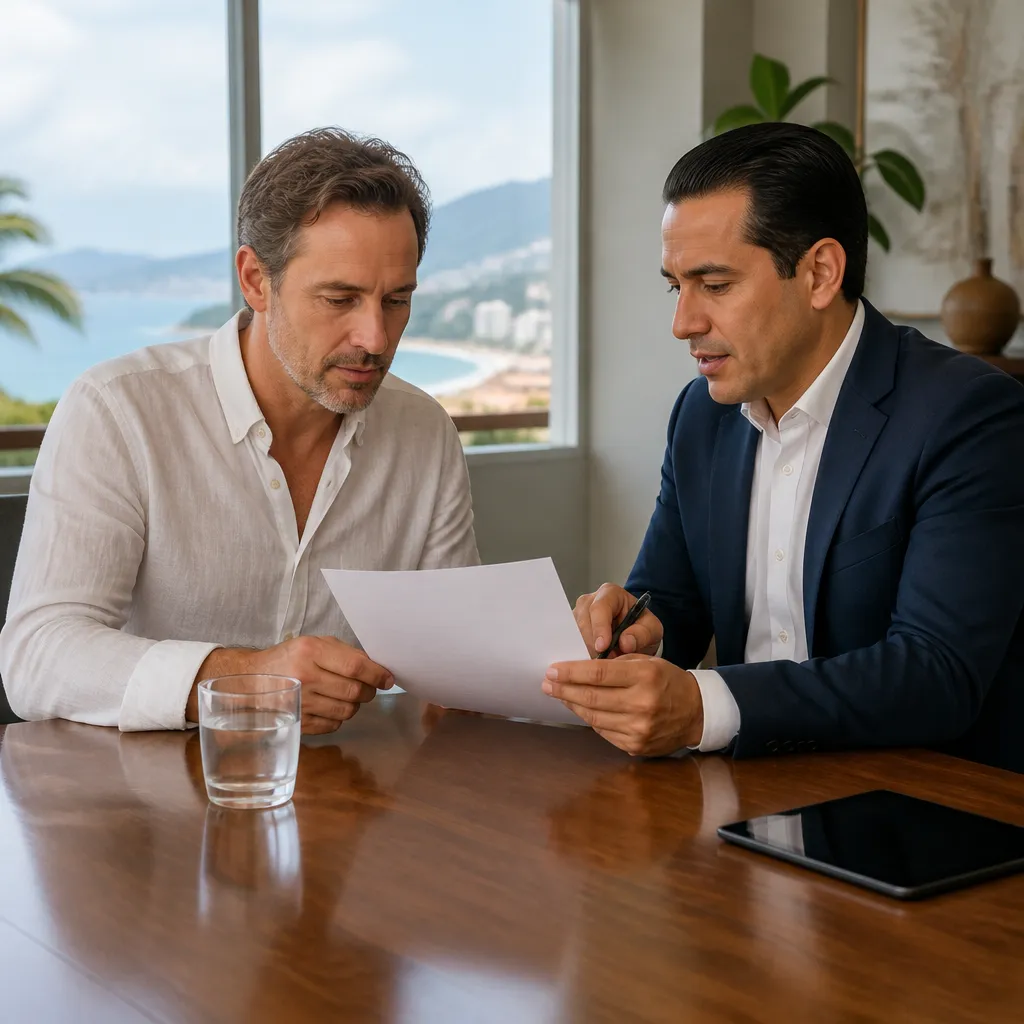
Why presales look like bargains
A presale price is often lower than the price of a finished unit in the same building, but that gap is compensation for risk, not a free discount. Compare the presale price with the expected completion value, the cost of waiting, and the chance that the timeline slips. Local market data suggests presales can make up a large share of listings while making up a much smaller share of completed sales, which is a reminder that many presales never turn into the transaction the buyer expected.
Where a deposit should sit
A deposit should be held in a structure that ties release to defined milestones, not to a developer’s word. If a developer asks you to send funds to a personal account, or to a company you cannot verify in the public record, stop and ask your lawyer to review the arrangement. Real estate closing coordination and escrow exist precisely to keep money and documents moving in order, with each step confirmed before the next one happens.
Rentals and Fake Vacation Listings
High season is also peak season for fake vacation rentals. The listing looks real, the photos are beautiful, and the price is below what similar homes charge. A foreign guest may send a deposit, arrive at the address and find that the owner has never heard of the booking, or that the unit belongs to someone else entirely.
Fake rentals often borrow photos from legitimate listings and attach them to a different building, a different unit or no unit at all. The booking platform may not catch the problem because the scammer keeps communication off-platform once the first contact is made.
Photos that belong to someone else
Run a reverse image search on the main photos before you pay anything, and check whether the same images appear under several names or addresses. Ask the host for a current video walkthrough that shows the building entrance, the unit number and a view from the window. If the host refuses to show the unit or changes the story, do not send money.
Pro tip: Never pay a rental deposit by bank transfer to an individual who will not provide a company name, a tax identification or a matching property address. Ask for a booking record on a platform you can verify.
Proving who controls the keys
Being able to show a booking confirmation is not the same as proving the person offering the unit owns it or has the right to rent it. For a long-term lease or a property you plan to buy as a rental investment, ask for proof of ownership and confirm it in the registry. Owners who are legitimate are rarely offended by that request.
Comparing Three Verification Routes
Buyers usually choose one of three ways to check a listing. Each catches different problems, and the gaps matter more than the marketing language. The table below compares the three approaches we see most often in practice.
Before you choose, remember that the cheapest route is rarely the one that protects your money. A few hours of registry work costs far less than a lost deposit or a title dispute that runs for years.

| Verification Approach | What It Catches | What It Misses |
|---|---|---|
| Seller-supplied documents only | Obvious forgeries and missing signatures, but only if the buyer knows what to look for | Duplicate sales, liens, unresolved inheritance claims and ejido status problems |
| Registry search plus notario review | Ownership gaps, liens, duplicate registrations and the authenticity of the transfer documents | Presale delivery risk and construction problems that the registry does not record |
| Full due diligence with escrow and closing coordination | Ownership, liens, deposit risk, contract terms and the sequencing of payments and signatures | Market value and neighborhood quality, which need a separate agent or inspector |
In our view, the seller-supplied route is not verification at all. The registry search is the minimum for any purchase, and full due diligence with escrow is the right choice when the transaction is large or involves a presale, an inheritance or land you have not seen a registered title for.
Neighborhood and Building Checks in Puerto Vallarta
Legal risk is not the only risk in a Puerto Vallarta purchase. A property can have clean title and still cost you more than expected because of building fees, water problems or a neighborhood whose sales are softening. These checks belong in due diligence, because they affect the value of the deal you are signing.
A late-October 2026 market summary from The Latin Investor reported that presales made up 63 percent of listings in Versalles and Fluvial, and that the local water utility, SEAPAL, had reported sewer backups in Versalles that month. Those are the kinds of facts a buyer should confirm before making an offer, not after closing.
Versalles and the water question
Versalles is often described as the strongest choice for most buyers, with average apartment asking prices around MXN 4.01 million and gross rental yields near 6.3 percent in the same summary. That case weakens if the drainage or water service is unreliable. Ask the seller and the building administration for recent service records, and check whether the sewer issues were in the building you are considering or in the street around it.
HOA fees and presale towers
Monthly HOA fees are part of the true cost of ownership. The same summary described fees of $150 to $400 a month for a two-bedroom as normal, and reported one Amapas listing charging MXN 7,000 a month. Before offering, ask for the last 12 months of fee statements, any pending special assessments and the reserve fund balance. A cheap listing with high fees and a special assessment is not a bargain.
Pro tip: Ask for the building’s written rules, meeting minutes and any notice of unpaid assessments before you make an offer. These documents often reveal problems that the listing never mentions.
Frequently Asked Questions
Is a registered title enough to make a purchase safe in Puerto Vallarta?
A registered title is necessary but not sufficient. You still need to check liens, annotations, the seller’s authority to sell, any inheritance claims and the status of the contract and payment structure. The title tells you who owns the property on paper, while the rest of the file tells you whether the transaction can close safely.
Why are foreign buyers targeted more heavily during high season?
Many buyers arrive for a short visit, feel the pressure of limited time and may be less familiar with local documents and procedures. Scammers take advantage of that urgency by pushing for quick deposits and fast signatures. Slowing down and scheduling the registry search before any payment is the simplest defense.
Should I pay a deposit before a notario or lawyer reviews the contract?
No. Review the contract and the registry record first, then decide whether and how to pay. A legitimate seller or developer will accept a short review period. If they refuse, treat that refusal as information about the transaction.
How can I confirm that a vacation rental is real before I send a booking deposit?
Run a reverse image search on the listing photos, ask for a current walkthrough, and confirm that the host can prove ownership or authority to rent the unit. Pay through a traceable channel tied to a company or platform you can verify. Be cautious of hosts who move the conversation off the platform early.
What should I check about HOA fees before making an offer on a condo?
Ask for recent fee statements, the reserve fund balance, any pending special assessments and the building’s written rules. Compare the total monthly cost with the rental income you expect, because high fees can erase much of a yield that looked strong on paper. Confirm these figures in writing before you rely on them in your offer.
Have you come across a listing or seller tactic in Puerto Vallarta that made you pause, and how did you handle it?